
Are Spanish wine exports plummeting?
The US wine market is undergoing a period of transformation, marked by a series of changes in consumer behavior and industry dynamics. Wine remains one of the most popular alcoholic beverages, but consumption has declined. This is due, among other things, to changes in the consumption habits of younger consumers, who are opting for alternatives such as craft beers, cocktails, and ready-to-drink beverages. Despite this, the wine market is far from stagnant, as the industry adapts to new consumer demands, offering healthier and higher-quality options. Premium wines, sparkling wines, and wine-based cocktails are showing signs of growth.
Therefore, it is essential to analyze the evolution of wine consumption, identify which types of wine are gaining popularity, and what current consumer preferences are.
In this article, we will explore trends in the US wine market and analyze the opportunities that different brands can take advantage of to remain competitive.
Wine market: current status
Between 2010 and 2024, per capita wine consumption in the U.S. has gradually declined in volume, with shifts in the types of wine most popular with American consumers.
Table wines (red, white, and rosé) account for the majority of consumption, with white wine being the most popular, with a market share of 49.88%. This is followed by red wine, with a share of 43.88%, and rosé, with 6.27%.

Trends in the wine market
The U.S. wine market is experiencing significant shifts in consumer preferences: a consumer trend toward higher-quality and more sustainable options.
1. A growing preference for domestic wines over imported ones
There is a clear trend toward consumption of domestic wines from local producers. Imported wines have declined, while domestic varieties have shown strong sales growth, particularly Californian red wines.
2. An increasing demand for premium wines
The growth in premium wine consumption is especially notable among millennials and older generations, who are willing to pay more for better quality and sustainable production methods.
Demography
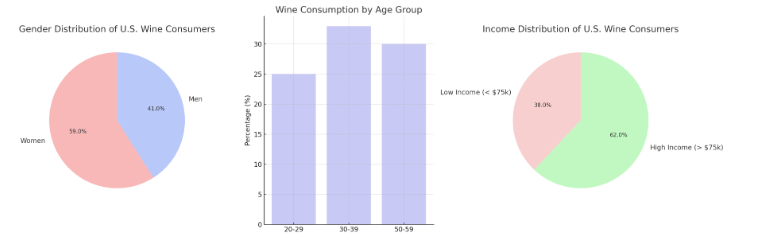
Demographics play a crucial role in shaping the future trajectory of the wine market, as wine consumption varies significantly by gender, age, and income levels.
Women account for 59% of wine consumers in the US, and men account for 41%. Women over 50 tend to consume wine more regularly than men. In terms of age, older generations are more likely to consume wine than younger generations. Twenty-five percent of young people between the ages of 20 and 29 drink wine, 33% of those between the ages of 30 and 39, and 30% of those between the ages of 50 and 59.
High-income households are the main consumers of domestic and imported wines (62% of the market share), while low-income groups tend to prefer more affordable wine options.
Meanwhile, American wine consumers are increasingly seeking healthier options: lower-calorie wines, organic and sustainably produced varieties, and those with additional health benefits, such as antioxidants. As a result, consumption of ready-to-drink (RTD) beverages has increased, reflecting the growing demand for convenient and healthy alternatives in the alcohol market.
Regional wine consumption in the U.S.
California is the leading wine-consuming state in the United States, both in volume and production. The state accounts for more than 86% of the nation’s wine supply, and Napa Valley stands out as the most recognized and popular wine region in North America, thanks to its exceptional vineyards and wineries.
While California leads in volume, states like Idaho, Washington, D.C., and New Hampshire surpass others in per capita consumption. Idaho stands out with an impressive consumption of 1.21 gallons of wine per capita.
Market opportunities
The wine industry faces both challenges and opportunities, with a notable transformation in consumer habits. Consumers are increasingly inclined to choose high-quality products that respect sustainability principles, which is reflected in a growing demand for organic and ecological wines. All of this has driven wineries to adopt innovative technologies and more responsible agricultural practices.
The quality of Spanish wine is highly valued, especially in international markets like the United States, where there is a growing preference for Spanish wines. They appreciate the unique characteristics of Spanish wines, such as their diversity of native varieties, their ancient winemaking traditions, and their production processes that maintain a deep connection with the terroir.
A commitment to quality, winemaking tradition, and the use of native varieties have been crucial to Spain’s competitiveness in international markets. Thanks to these characteristics, Spain has managed to position itself as one of the leading wine exporters to the US market, despite fierce competition from other major producers such as France and Italy.