
Which do consumers prefer?
Wine consumption patterns are constantly evolving and changing, as they are directly influenced by consumer preferences, social changes, and different lifestyles.
Traditionally, red wine has been the predominant choice, but in recent years, white wine has been gaining prominence in the international market.
A greater and more diverse offering of quality white wines has led to an increase in consumption as a refreshing drink for an aperitif or to pair with lighter meals.
Next, we’ll take a look at current consumer trends in the wine sector.

Red or white wine: evolution of consumption
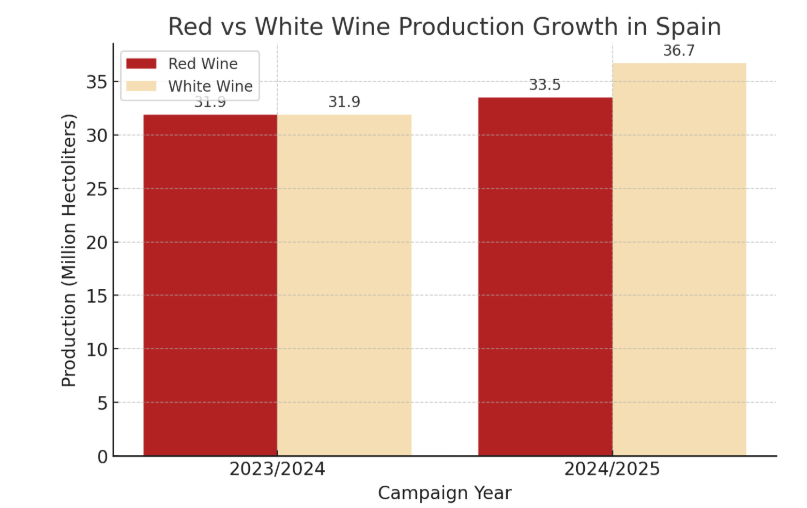
What does the consumer prefer, red or white? In Spain, cumulative white wine and must production in the first five months of the 2024/2025 campaign shows a 15% increase compared to the same period in the previous campaign. This increase in production reflects the growing demand for white wines, positioning them as an alternative to other beverages such as beer.
Key factors driving white wine growth
This phenomenon is due to several factors:
- Changes in consumption habits: The aperitif culture has gained strength in many countries, and white wine has positioned itself as an ideal option for this time of day.
- New consumer preferences: Younger generations are looking for less traditional and more accessible options, and white wines, with their fruity profiles and ease of consumption, fit perfectly into this trend. Furthermore, they value innovation in wine offerings, which has led to a boom in white varieties with new production methods, such as organic, natural, and low-intervention wines.
- Social consumption and lower alcohol content: People are increasingly opting for more moderate alcohol consumption, and white wine stands out for its lower alcohol content. The fact that it doesn’t contain carbonation makes it an attractive option. It pairs with a wide range of dishes and is light in taste.
- Greater presence in female consumption: various studies have shown a growing preference for white wine among the female public.
Red vs. white wine market trends: The shift to white wine
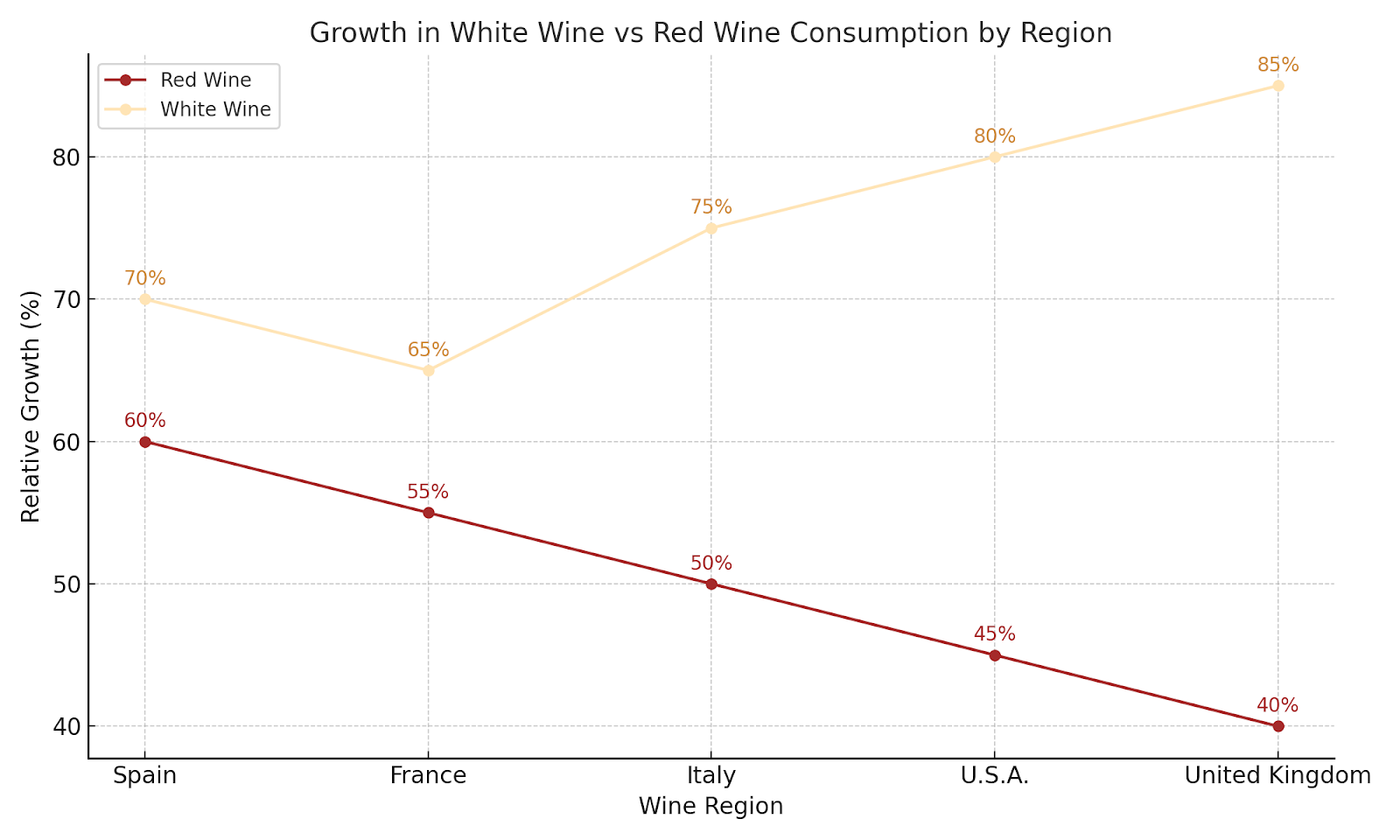
In recent years, white wine production has experienced significant growth to meet global demand. In historic wine-producing regions such as Spain, France, Italy, and the United States, there has been an increase in the area devoted to white varieties. Countries such as Italy and Spain, which in the past had focused more on red wine production, have been adapting their vineyards to grow more white varieties.
In the United States and United Kingdom markets, white wine has surpassed red wine consumption in recent years. This trend is due to its response to the preferences of younger consumers, who seek fresher, fruitier options. The quality and diversity of white wines produced in California, Oregon, and Washington have improved.
In Spain, although red wine remains a significant choice, wineries are increasingly investing in white wine production. This trend is due not only to domestic demand but also to the growing export of Spanish white wines to international markets.
The choice between red or white wine remains a matter of taste and occasion. There is no one better than the other, but rather different moments and preferences. While red remains a benchmark for hearty meals and formal events, white stands out as a fresh, versatile option in tune with new ways of enjoying wine.
Without a doubt, the wine market is undergoing a phase of diversification, with both red and white wines having their place. Wineries are striving to expand their offerings, with increasingly sophisticated white wines that rival the most prestigious reds in complexity and quality.
Looking to explore more about red vs. white wine? At Bodegas Nodus, we are passionate about wine and are happy to guide you through the latest industry trends. Contact us today!